Creating great content is no longer just about good design.
It’s about designing for the right format.
One of the biggest mistakes brands, businesses, and creators make is producing visuals without considering where the content will actually be viewed.
A design that looks perfect on Instagram may perform poorly on YouTube.
A horizontal video may fail completely on TikTok.
Understanding the most important content dimensions can dramatically improve visibility, engagement, and performance across platforms.
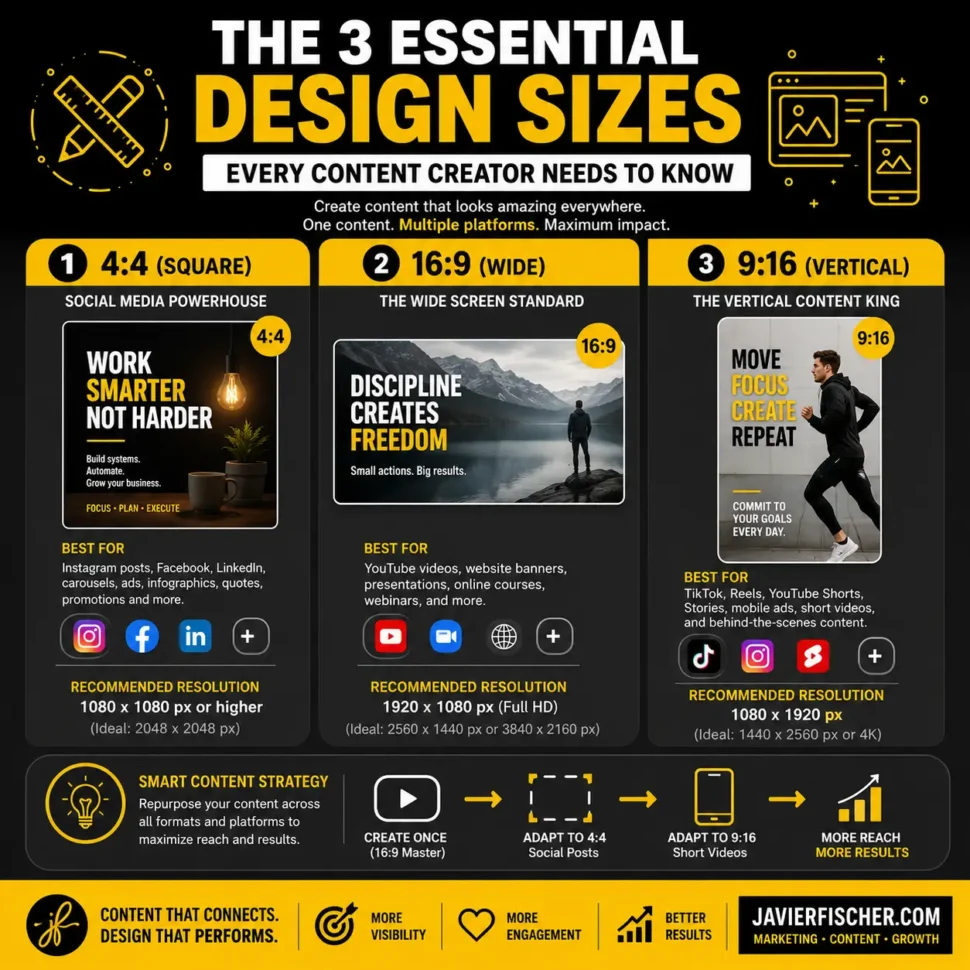
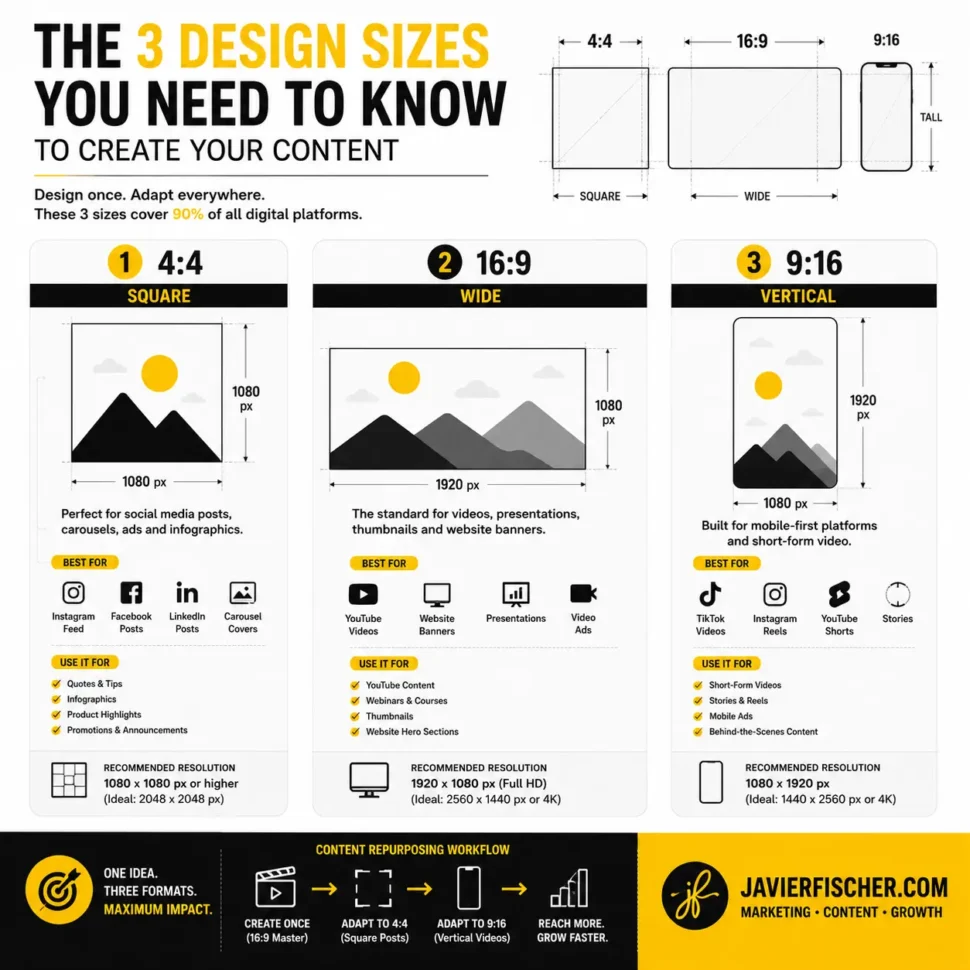
If you create content for social media, advertising, websites, or digital marketing, there are 3 essential design sizes you need to master.
1. 4:4 Format — The Social Media Powerhouse
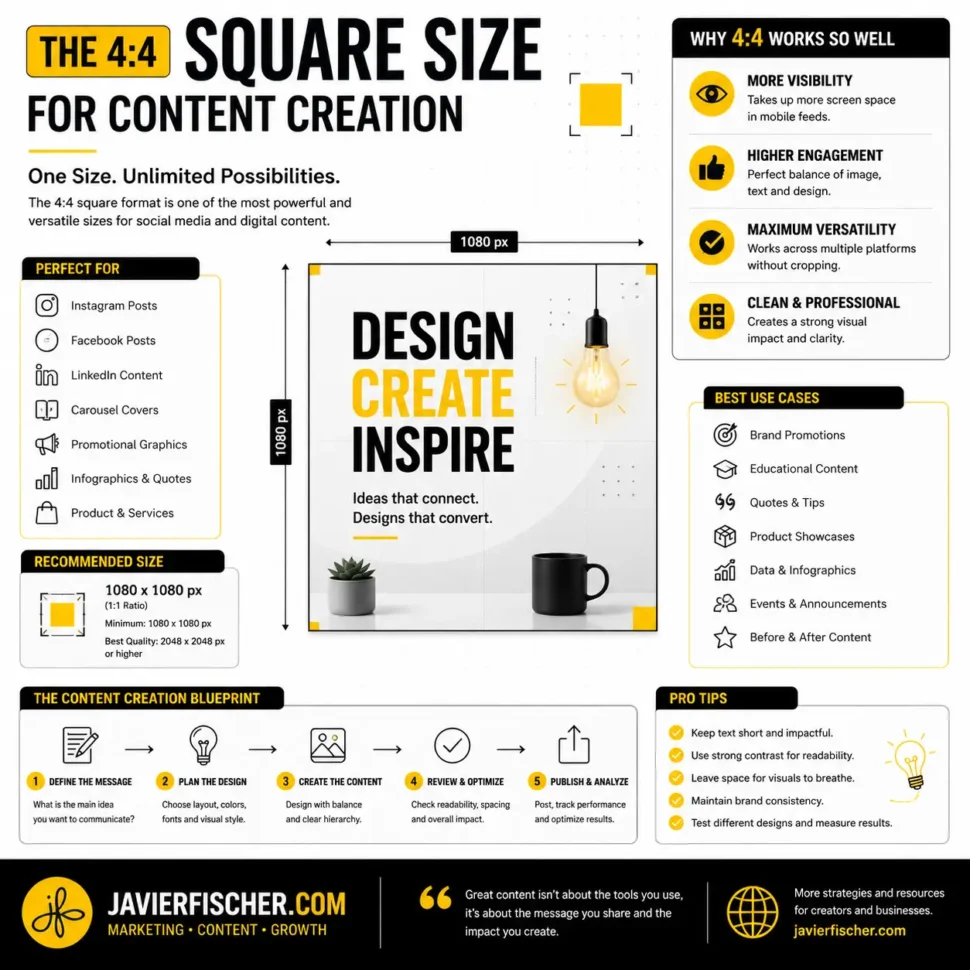
The 4:4 square format is one of the most versatile content sizes online.
This format works exceptionally well for:
- Instagram posts
- Facebook posts
- LinkedIn content
- Carousel covers
- Promotional graphics
- Product ads
- Infographics
Why 4:4 Works So Well
Square content takes up more screen space on mobile devices compared to horizontal formats.
This helps:
- ✅ Increase visibility in feeds
- ✅ Improve engagement
- ✅ Create cleaner compositions
- ✅ Make text easier to read
The square format is also highly adaptable because it works across multiple social platforms without needing major adjustments.
Best Use Cases
- Brand promotions
- AI infographics
- Quotes
- Product showcases
- Educational content
- Before-and-after visuals
Recommended Resolution
1080 x 1080 px or higher.
For premium quality designs, many creators now work in 2048 x 2048 px or 4K square formats.
2. 16:9 Format — The Wide Screen Standard
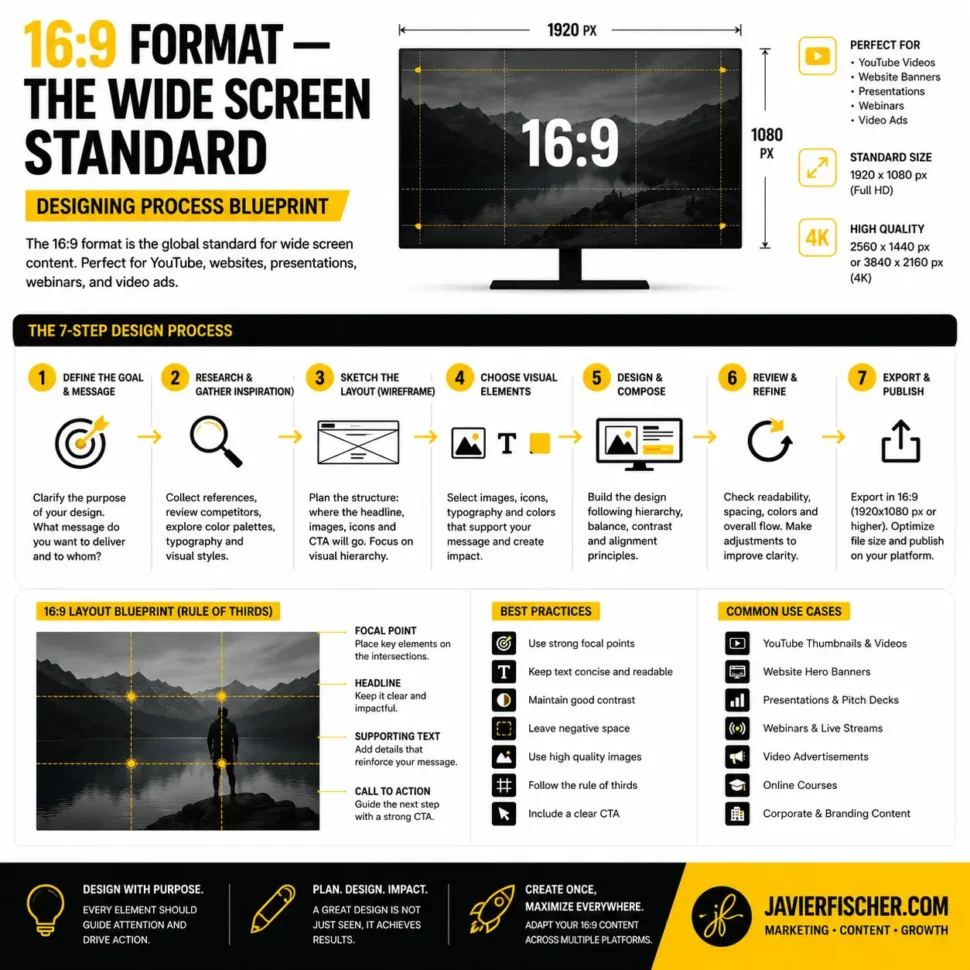
The 16:9 aspect ratio is the global standard for horizontal video and presentation content.
You see this format everywhere:
- YouTube videos
- Website banners
- Online courses
- Presentations
- TV screens
- Desktop video ads
- Webinars
Why 16:9 Is Important
This format is optimized for desktop viewing and cinematic experiences.
It creates a professional and immersive look, especially for video content.
Wide layouts also allow more space for:
- Landscapes
- Product demonstrations
- Screen recordings
- Tutorials
- Interviews
- Motion graphics
Best Use Cases
- YouTube thumbnails
- Video podcasts
- Brand commercials
- Website hero sections
- Educational videos
- Corporate presentations
Recommended Resolution
1920 x 1080 px (Full HD)
Higher-end creators often use:
- 2560 x 1440 px
- 3840 x 2160 px (4K)
3. 9:16 Format — The Vertical Content King
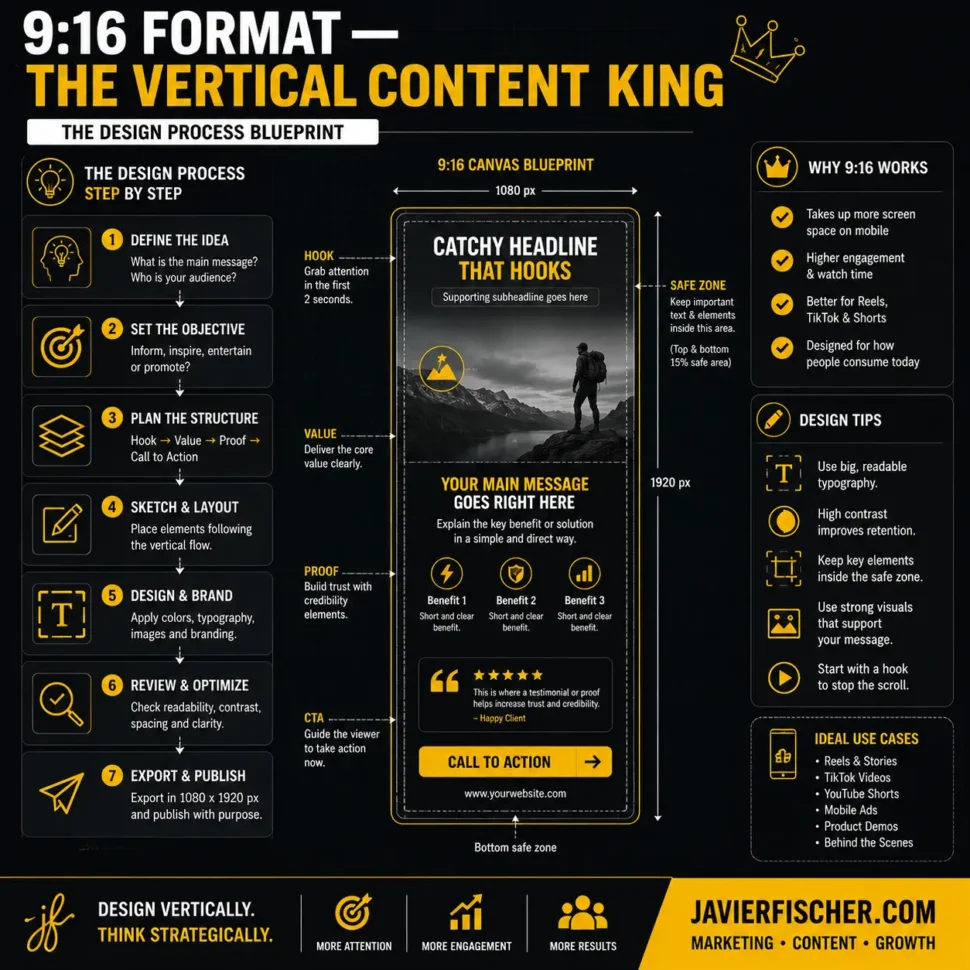
Vertical content dominates modern social media.
Platforms like:
- TikTok
- Instagram Reels
- YouTube Shorts
- Facebook Reels
- Snapchat
are designed primarily for vertical viewing.
Why 9:16 Is Essential
Most users consume content directly from their smartphones.
Vertical designs maximize screen coverage and reduce distractions.
This creates:
- ✅ Higher watch time
- ✅ Better engagement
- ✅ More immersive experiences
- ✅ Stronger algorithm performance
Today, short-form vertical video is one of the most powerful forms of content marketing.
Best Use Cases
- Reels
- TikTok videos
- Story content
- Mobile-first ads
- Product demos
- Behind-the-scenes content
- AI-generated animations
Recommended Resolution
1080 x 1920 px
For high-end productions:
- 1440 x 2560 px
- 4K vertical formats
Why Content Creators Need All 3 Formats
Modern content marketing is multi-platform.
One piece of content is often repurposed into multiple formats.
For example:
A YouTube video (16:9) can become:
- ➡ A Reel (9:16)
- ➡ A LinkedIn graphic (4:4)
- ➡ A carousel post
- ➡ A blog image
- ➡ An ad creative
Brands that understand format adaptation create more efficient and scalable content systems.
The Smart Content Strategy
Instead of designing for one platform only, smart creators now build content ecosystems.
This means creating assets that can easily be adapted across:
- TikTok
- YouTube
- Websites
- Ads
- Email marketing
The result:
- More reach.
- More engagement.
- More visibility.
- Without constantly creating content from scratch.
Final Thoughts
The future of content creation is platform optimization.
Understanding the 3 essential design formats — 4:4, 16:9, and 9:16 — gives creators a major advantage in today’s digital landscape.
The best creators are not only good designers. They know how to design for attention. And attention starts with the right format.